How to Write Product Descriptions That Answer Real Questions : For Beginners de
Why most product descriptions do not help enough
A lot of product descriptions sound polished but leave shoppers with the same question: okay, but what is this actually like? That is the problem. Many small stores use vague phrases, recycled supplier copy, or one short paragraph that says almost nothing useful.
A shopper usually does not need more adjectives. They need clear information. They want to know what the item is, who it is for, how it feels, how big it is, what it solves, and what to expect after ordering. If the description skips those basics, the page can still look nice and underperform.
For a small online store, a better product description is one of the easiest trust upgrades you can make. It helps shoppers feel more confident, reduces avoidable questions, and makes the whole product page feel more complete.
What shoppers actually want to know
When someone lands on a product page, they start doing a quick mental check. Is this the right item for me? Will it work the way I expect? Can I trust what I am seeing? A good description helps answer those questions fast.
That does not mean every product needs a long wall of text. It means the copy should cover the real points that affect buying decisions.
For most products, shoppers want to know:
- what the item is
- what makes it useful
- size, material, or fit details
- how to use it or care for it
- who it is best for
- any limits or expectations they should know before buying
A simple example helps. If you sell a linen tote bag, “effortlessly stylish and made for daily life” is too vague on its own. A more useful version would explain that it fits a laptop, has a certain handle drop, folds flat, and works well for errands or light office carry. That is the kind of detail that lowers hesitation.
Descriptions also help with trust when they sound honest. If a candle has a light scent throw, say that. If a ceramic mug is handmade and may vary slightly, say that. Honest detail usually works better than trying to make every product sound perfect.
How to write descriptions that feel clear and useful
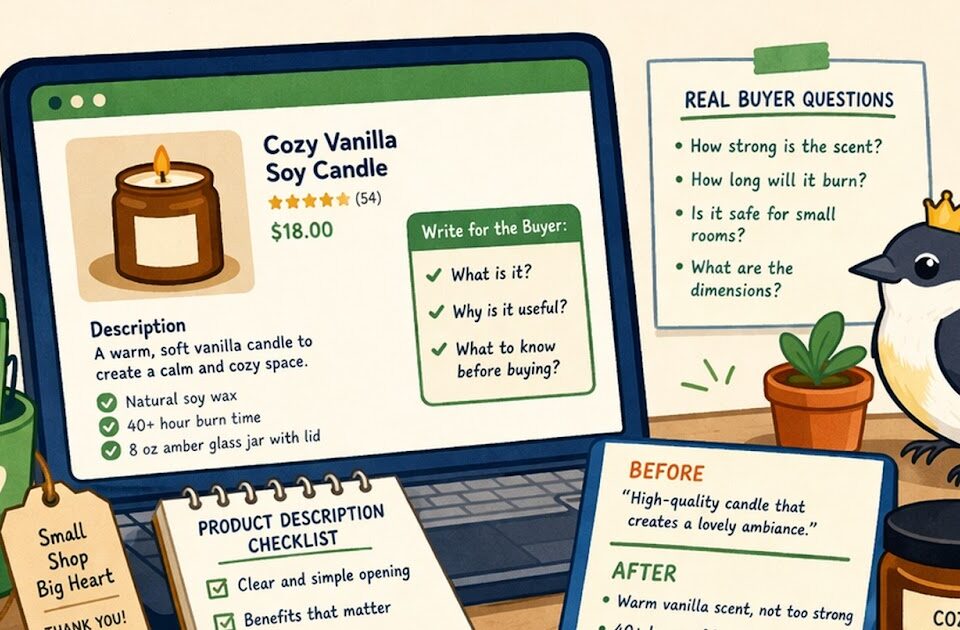
A strong product description usually works best when it moves from quick clarity to practical detail. Start with a short summary that says what the item is and why someone might want it. Then add the facts that help people decide.
Think of the structure like this:
- One short opening that explains the product in plain language
- A few lines on what makes it useful or different
- Bullet points for practical details
- Care, fit, usage, or shipping notes when relevant
This keeps the page readable. It also helps shoppers who skim first and read deeper only if the item still looks promising.
A simple writing formula
You do not need a complicated copywriting framework. For many small stores, this simple structure is enough:
What it is
Name the item clearly.
Why it helps
Say what it is good for or why someone would choose it.
What to know before buying
Include dimensions, materials, fit, care, or limits.
Here is a plain example for a ceramic mug:
“This 12 oz ceramic mug is made for everyday coffee or tea at home or at your desk. It has a rounded handle, a comfortable grip, and a slightly speckled glaze that gives each piece a handmade feel. Microwave safe. Hand-wash recommended. Because of the finish, small variation in speckling is normal.”
That description is not flashy. It is useful. It answers real questions without sounding robotic.
Practical steps
- Start with the buyer’s likely question, not the brand’s vibe.
- Replace vague phrases with measurable or visual details.
- Break out specs into bullets when that makes the page easier to scan.
- Mention fit, feel, use case, or care where they matter.
- Read the description out loud to catch awkward wording.
That last step helps more than people think. If the description sounds unnatural when spoken, it often feels harder to trust on the page too.
Common product description mistakes to avoid
One common mistake is writing only for tone. Brand voice matters, but not more than clarity. If your description sounds stylish but leaves out the basic facts, the shopper still has to guess.
Another issue is copying manufacturer text without editing it. That tends to create generic pages that sound like everyone else. It can also make the product feel less personal and less specific to your store.
A third mistake is skipping the buyer’s real concerns. A product page for a notebook should probably mention paper type, size, and whether pens bleed through. A page for a candle should mention scent strength, burn time, or jar size. A page for a tote should mention dimensions, weight, and what fits inside. These are not tiny details. They are often the reason someone buys or leaves.
Common mistakes
- Using vague phrases like “premium quality” without proof
- Hiding size, material, or care details
- Writing one short paragraph and stopping there
- Sounding overly promotional instead of helpful
- Ignoring the questions customers keep asking in email or chat
A good description often starts by looking at those support questions. If customers keep asking whether a bag fits a laptop or whether a shirt runs small, your product page is telling you what is missing.
There is also a difference between being concise and being thin. A short description can work if it answers the right questions. A thin one leaves the shopper doing extra work.
A quick product description checklist summary
Quick checklist
- [ ] The description says clearly what the item is
- [ ] The first lines explain why someone would want it
- [ ] The copy answers likely buyer questions
- [ ] Size, material, fit, or care details are included where relevant
- [ ] Bullets are used when they make details easier to scan
- [ ] The wording sounds natural, not stuffed or overly dramatic
- [ ] The copy matches the actual product honestly
- [ ] Support questions have been turned into useful page details
- [ ] The description feels readable on mobile
- [ ] The whole page feels more trustworthy after the copy is added
If several of these are missing, the product description is probably not doing enough work yet.
Write for the buyer, not the brand mood board
A good product description does not need to be clever first. It needs to be useful first. That is especially true for a small online store where every page has to carry its weight.
When descriptions answer real questions, they help on several levels. They support trust, reduce hesitation, and make the page feel more complete. They can also save time by cutting down on basic support questions.
This is why product descriptions are worth revisiting product by product. Start with your best sellers or the pages that already get traffic. Tighten the first lines. Add the missing facts. Turn repeated customer questions into better copy. Those small changes can make the buying experience feel smoother right away.
Gentle next step
Pick one product today and rewrite the description with a simple goal: answer the questions a cautious first-time shopper would have before buying. Keep the language plain, keep the facts visible, and do not overthink the tone. Sin estres. Useful copy usually performs better than fancy copy that leaves people guessing.
FAQs
Q1. How long should a product description be?
A1. Long enough to answer real buying questions, short enough to stay readable. The right length depends on the product, but the description should cover the details that affect the buying decision.
Q2. Should product descriptions be written in bullets or paragraphs?
A2. Often both. A short paragraph can explain the product, and bullets can make specs or practical details easier to scan.
Q3. Is it okay to use supplier descriptions?
A3. It is better to rewrite them. Supplier copy is often generic and may skip the details your customers actually care about.
Q4. What should I include if customers keep asking the same questions?
A4. Add those answers directly into the product description or nearby product details. Repeated customer questions usually point to missing copy.