What to Put in Your Store FAQ : For Beginners de
Why a store FAQ matters more than people think
A lot of small store owners treat the FAQ page like a backup page. It gets built late, filled with generic answers, and left alone. The problem is that shoppers often use the FAQ to answer the exact questions that decide whether they buy or leave.
That is especially true for newer stores. When people do not know your brand yet, they look for clarity and reassurance. They want to know how long shipping takes, whether returns are simple, and how to get help if something goes wrong. If those answers are hard to find, trust drops fast.
A good FAQ page does not need to be long. It needs to cover the real questions customers ask before and after they order. For a small online store, that makes the FAQ one of the simplest pages you can improve for both trust and support.
What questions belong in a store FAQ
The best FAQ pages usually focus on the practical stuff first. That means the questions customers ask before they buy, not the questions you think sound impressive.
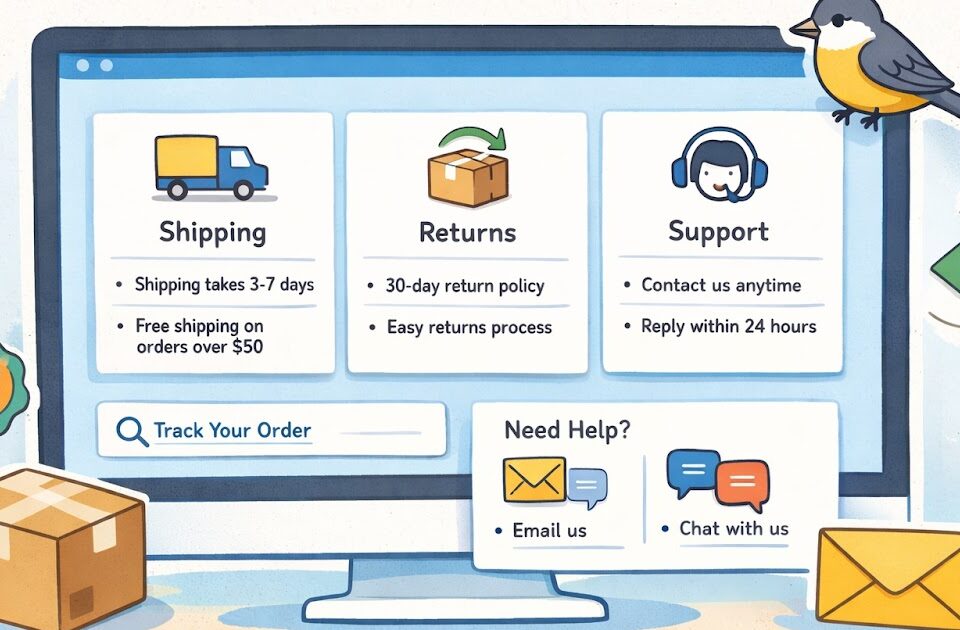
For most small online stores, the most useful FAQ topics fall into three groups: shipping, returns, and support. Those are the questions that tend to create hesitation if they are not answered clearly.
Shipping questions to include
Shipping questions are often the first thing a cautious shopper checks. They want a basic sense of timing, cost, and what happens if there is a delay.
Common shipping questions include:
- How long does shipping take?
- When will my order ship?
- Do you ship internationally?
- How much does shipping cost?
- Do you offer free shipping?
- What happens if my package is delayed or lost?
You do not need long answers. You need plain answers. “Orders usually ship within 2 business days” is more useful than “We process orders as quickly as possible.”
Return questions to include
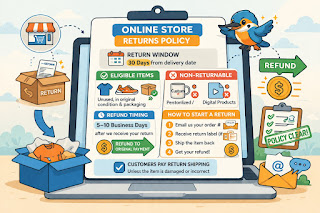
Returns are a trust issue as much as a policy issue. Even shoppers who never plan to return something often want to know the process feels fair before they order.
Common return questions include:
- What is your return window?
- What items cannot be returned?
- How do I start a return?
- Do I have to pay return shipping?
- When will I get my refund?
- What if my order arrives damaged?
A beginner-friendly FAQ should make these answers easy to scan. If you use legal-sounding language or bury the key detail halfway through the answer, the page stops helping.
Support questions to include
Support questions help customers know where to go when they need a real person. They also reduce the feeling that your store is hard to reach.
Useful support questions include:
- How can I contact you?
- What is your response time?
- Do you offer support on weekends?
- Can I change or cancel my order?
- What if I entered the wrong shipping address?
- Where can I track my order?
If you already get the same support email over and over, that question belongs in your FAQ.
How to write FAQ answers that are actually useful
A lot of FAQ pages fail because the questions are fine, but the answers are vague. This is where a little cleanup goes a long way.
Start by writing the answer the way you would explain it to a customer in a short email. Then tighten it. That usually creates a better result than trying to sound formal from the beginning.
For example, instead of: “We strive to provide timely customer service and fulfillment support for all orders.”
Try: “You can reach us by email at [email protected]. We usually reply within 1 to 2 business days.”
That second version sounds more human and tells the shopper what they actually need to know.
Practical steps
- Start with the real customer question, not a brand phrase.
- Answer the question in the first sentence.
- Add one or two details if they help avoid confusion.
- Use plain language instead of policy-heavy wording.
- Keep each answer short enough to scan on a phone.
A useful FAQ also stays consistent with the rest of the store. If your shipping page says one thing and your FAQ says another, that creates doubt. The same goes for returns, response times, or order processing.
It helps to think of the FAQ as part of your trust setup, not just your support setup. A clear answer can quietly remove friction before a customer ever emails you.
A simple example
A weak FAQ answer: “Shipping times may vary depending on multiple factors.”
A better FAQ answer: “Most orders ship within 2 business days. Standard delivery usually takes 3 to 7 business days after shipment. If there is a delay, we will email you.”
The better version is not fancy. It is just useful.
Common FAQ mistakes that create more confusion
One common mistake is filling the page with generic questions nobody asked. A shopper usually does not need broad statements about your commitment to quality. They need practical answers tied to buying, delivery, and support.
Another issue is writing answers that sound defensive or overly formal. That can happen when founders copy policy language directly into the FAQ. Policies matter, but FAQ copy should usually sound simpler and easier to read.
There is also the problem of splitting answers across too many places. If shipping details are on one page, order tracking is on another, and your FAQ only hints at both, the shopper still has to dig around. The FAQ should help people find the answer fast, even if a separate full policy page also exists.
Common mistakes
- Writing vague answers that avoid specifics
- Using the FAQ for branding language instead of customer help
- Forgetting to update the page when policies change
- Hiding support contact details
- Answering too many minor questions before the important ones
Order matters too. Put the most common and most decision-shaping questions near the top. For many stores, that means shipping, returns, tracking, and contact details first. Questions about gift wrapping or promo code issues can come later.
A small example: imagine a shopper considering a first order from a handmade soap shop. They may love the products, but still pause if they cannot find out how long shipping takes or what happens if something arrives damaged. A strong FAQ helps resolve that pause before it turns into a lost sale.
A quick FAQ checklist summary
Quick checklist
- [ ] The FAQ covers shipping, returns, and support first
- [ ] The most common customer questions are near the top
- [ ] Answers are written in plain language
- [ ] Each answer gets to the point quickly
- [ ] Response times and contact methods are clear
- [ ] Shipping timing and return basics are easy to understand
- [ ] The FAQ matches the store’s policy and support pages
- [ ] The page is easy to scan on mobile
- [ ] The questions come from real customer concerns
- [ ] The FAQ reduces the need for repeat support emails
If your FAQ misses several of these basics, it is probably not helping as much as it could.
Build the FAQ your customers already need
A good FAQ page is not about having more questions. It is about covering the right ones. For a small online store, that usually means the practical questions customers quietly ask before they trust you with an order.
That is why the first best move is simple. Start with shipping, returns, and support. Write the answers in plain language. Keep them short. Update them when something changes. That alone can make the store feel easier to trust and easier to buy from.
The page does not need to sound polished or clever. It needs to sound clear. That is what helps.
Gentle next step
Open your support inbox or message history and look for the five questions customers ask most. Start your FAQ with those. Then add the shipping, return, and contact answers that a first-time shopper would want before placing an order. Sin estres. A useful FAQ can save support time and build trust at the same time.
FAQs
Q1. How many questions should a store FAQ have?
A1. Enough to cover the most common concerns clearly. For many small stores, a focused FAQ with shipping, returns, tracking, and support basics is more useful than a long page filled with minor questions.
Q2. Should my FAQ repeat what is already on my policy pages?
A2. It can summarize the most important points in simpler language. The FAQ should help people get quick answers, while the full policy pages can hold the complete details.
Q3. What should go first on an FAQ page?
A3. Put the questions that affect trust and buying decisions first. Shipping, returns, tracking, and contact details are often the best place to start.
Q4. How do I know what to add to my FAQ?
A4. Start with the questions customers ask repeatedly in email, chat, or social messages. Those questions usually show where your store still needs clearer answers.