How to Create Your First About Page for an Online Store : For Beginners de
Why an About page matters more than it seems
A lot of small store owners treat the About page like a nice extra. They focus on the homepage, product pages, and checkout, then promise themselves they will come back to the brand story later. The problem is that shoppers often visit the About page when they are trying to decide whether the store feels real.
That matters even more for a newer brand. If someone has never heard of your store before, they are looking for trust, clarity, and a basic sense of who is behind the business. They do not always need a long founder story. They do need a reason to feel that this is a real store run by real people with a real point of view.
For a small online store, a good About page is less about sounding impressive and more about reducing doubt. It helps people understand what you sell, why the store exists, and what kind of experience they can expect.
What your first About page should actually include
The first version of an About page does not need to be long. In fact, it usually works better when it is focused. A shopper should be able to read it quickly and leave with a clear sense of the brand.
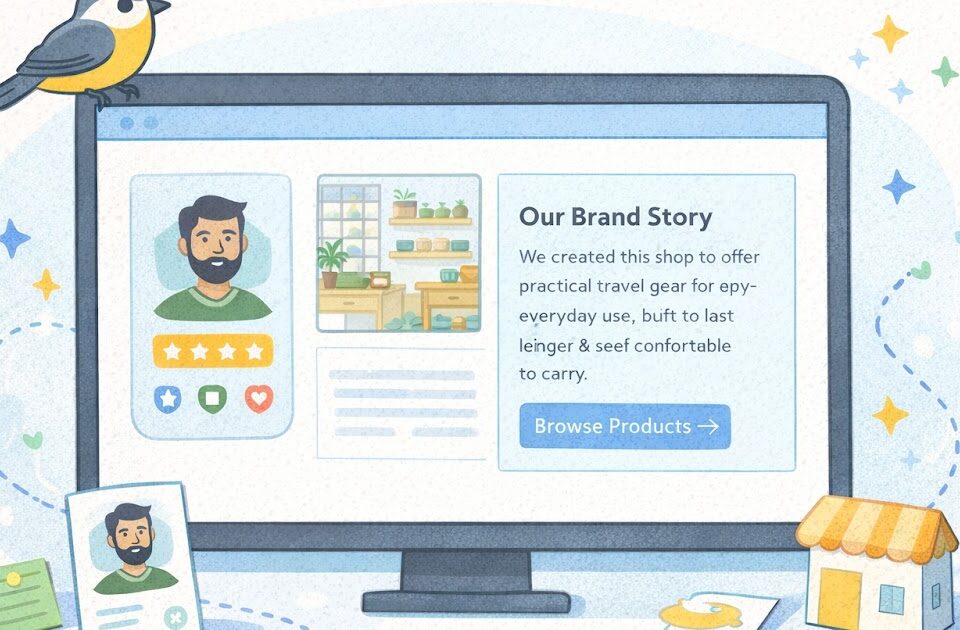
Start with the basics. What does the store sell, and why does it exist? That can be answered in a few lines. For example, a small stationery brand might say it started because the owner wanted simple desk tools that looked clean and held up to everyday use. A skincare store might explain that it focuses on fragrance-light basics for sensitive skin.
That kind of explanation is enough to give the store a shape. It tells people what the brand is about without turning the page into a memoir.
A good About page often includes:
- A short brand introduction
- A simple reason the store exists
- A few words about who the products are for
- A brief note on values, standards, or approach
- A photo, illustration, or founder image if it helps
- A gentle next step, like browsing products or contacting support
That does not mean every store needs all of these in the same order. It means the page should answer the quiet questions a shopper may have: what is this store, who is it for, and why should I trust it?
One small but useful detail is specificity. “We make practical travel pouches for short trips and everyday carry” tells me more than “We believe in thoughtful essentials.” The first version feels grounded. The second version could belong to almost any brand.
How to write an About page that feels clear and trustworthy
The easiest way to write an About page is to stop thinking of it as a speech. Think of it as a short introduction for a first-time customer who wants the straight version.
Start with a plain opening. Say what the store does and who it serves. Then explain the reason behind it in a natural way. That reason does not need to be dramatic. You do not need a life-changing origin story for the page to work.
A lot of strong About pages follow a simple pattern:
- What the store sells
- Why the store exists
- What matters in the way the products are chosen or made
- What kind of customer experience you aim to provide
Here is a simple example:
“We started this shop to make everyday kitchen tools easier to choose. Instead of dozens of lookalike options, we focus on a smaller set of practical items that are easy to use, easy to gift, and built for daily life.”
That works because it is clear. It says what the brand does and what the shopper can expect.
Practical steps
- Write the first version in plain language, not brand language.
- Keep the opening short and specific.
- Add one honest reason the store exists.
- Say who the products are for.
- End with a simple next step, like “Browse the collection” or “Get in touch.”
It also helps to sound human. A small store can feel more trustworthy when the page sounds like a real person wrote it. That does not mean overly casual. It means natural.
If you want to include a founder detail, keep it relevant. A short line about starting the store from a spare room, a kitchen table, or after not finding a better option in the market can work well. Just do not let the page drift too far away from the customer. The About page is still there to help the shopper understand the store, not just the founder.
Visuals matter too. One clean photo, a studio shot, a workspace image, or even a simple branded illustration can help the page feel more complete. But the image should support the message, not replace it.
Common About page mistakes that make stores feel vague
One common mistake is writing an About page that could belong to almost any brand. Phrases like “curated with care,” “made with passion,” or “inspired by everyday living” are not wrong, but they are too broad on their own. They do not tell the shopper enough.
Another problem is making the page too long. When the About page becomes a full personal history, people stop scanning for the details they actually came to find. Most shoppers do not need your whole timeline. They need the parts that explain the store clearly.
A third issue is focusing only on the founder and not enough on the customer. It is fine to include the human side of the business. That often helps. But the page still needs to tell the visitor what the store offers and why it may be a good fit for them.
Common mistakes
- Writing vague lines that sound nice but say very little
- Making the page too long and hard to scan
- Telling a founder story without connecting it to the products
- Forgetting to explain what the store actually sells
- Leaving out any clear next step after the page
There is also the risk of trying too hard to sound polished. For a small online store, honesty usually does more work than polish. A short, grounded About page feels more trustworthy than one full of abstract language.
A simple example: imagine a candle shop that says, “We create moments of warmth and beauty through intentional design.” That sounds nice, but it does not tell the shopper much. A clearer version might say, “We make small-batch candles with straightforward scent profiles and simple packaging that works well at home or as a gift.” That version is easier to trust because it is more concrete.
A quick About page checklist summary
Quick checklist
- [ ] The page clearly says what the store sells
- [ ] The brand reason is explained in plain language
- [ ] The copy says who the products are for
- [ ] The page feels specific, not generic
- [ ] The length is easy to scan on mobile
- [ ] A human detail is included if it adds trust
- [ ] The page includes a visual if it helps
- [ ] The tone sounds natural, not overly formal
- [ ] The page ends with a simple next step
- [ ] The whole page makes the store feel more real
If several of these points are missing, the About page may still feel unfinished even if it technically exists.
Keep it honest, simple, and easy to scan
Your first About page does not need to be perfect. It needs to help a first-time shopper understand the store and feel a little more confident about it.
That is why the best first move is usually simple. Say what you sell. Say why you started. Say who it is for. Keep the wording natural. Add one photo or visual if it helps. Then give people a clear path back into the store.
For a small online shop, that kind of page does quiet work. It supports trust, gives the brand a human shape, and fills in the context that product pages alone cannot always provide.
Gentle next step
Draft your About page in one short version first. Aim for clear, specific, and human. Then read it once like a stranger who has never heard of your store. If the page still leaves “what is this store?” unanswered, tighten the opening before anything else. Sin estres. A simple About page that feels real will usually help more than a polished one that says very little.
FAQs
Q1. Does a small online store really need an About page?
A1. In many cases, yes. It helps first-time shoppers understand who is behind the store and can make a newer brand feel more trustworthy.
Q2. How long should an About page be?
A2. Long enough to explain the basics clearly, short enough to stay easy to scan. Many strong About pages are only a few short sections.
Q3. Should I put my personal story on the About page?
A3. You can, but keep it relevant to the store. The best founder details usually support the brand story instead of taking over the whole page.
Q4. What should the page end with?
A4. A simple next step works well, like browsing products, reading FAQs, or contacting the store.