What to Pack for an Australian Road Trip in Heat and Distance : For Beginners de
Pack for Australia, not just for a holiday
An Australian road trip can feel easy on paper. You load clothes, snacks, chargers, and go. The problem is that Australian driving conditions can change the job fast. Heat, long gaps between stops, animal activity near dawn and dusk, and weather shifts can turn a casual packing list into a weak one.
A better approach is to pack for delay, distance, and driver fatigue first, then add the comfort items after that. This guide is general planning information for ordinary road trips on sealed roads. It is not route-specific mechanical advice, and it does not replace local warnings or emergency instructions.
Road trip packing at a glance
- Best for: Australian drivers planning interstate, regional, holiday, or long-day drives, especially where stops are spread out.
- What this covers: A practical packing list built around heat, distance, fatigue, weather, and minor breakdown delays.
- What this does not cover: Route-specific towing advice, off-road recovery training, or mechanical diagnosis.
- Main caution: A packed car is not the same thing as a prepared trip. Your rest plan, weather checks, and vehicle condition matter just as much.
- When to get professional help: If your car has unresolved mechanical issues, you are towing and are not confident about setup, or anyone travelling has medical, mobility, or medication needs that could complicate delays.
What to pack before the fun stuff goes in
Start with the items that matter if you are delayed, not the items that make the drive more pleasant. That sounds obvious, but plenty of road trip packing still starts with playlists, outfits, camera gear, and snacks you could buy later. The smarter order is water, fuel planning, tyres, lighting, documents, charging, weather checks, and only then the extras.
If your route includes regional or remote sections, treat every stop as less guaranteed than it looks on a city map. Pack so a longer wait, a detour, or a closed roadhouse does not immediately become a problem. That does not mean panic-packing. It means carrying the basics that buy you time and choices.
The five packing groups that actually matter
1. Water, food, and delay supplies
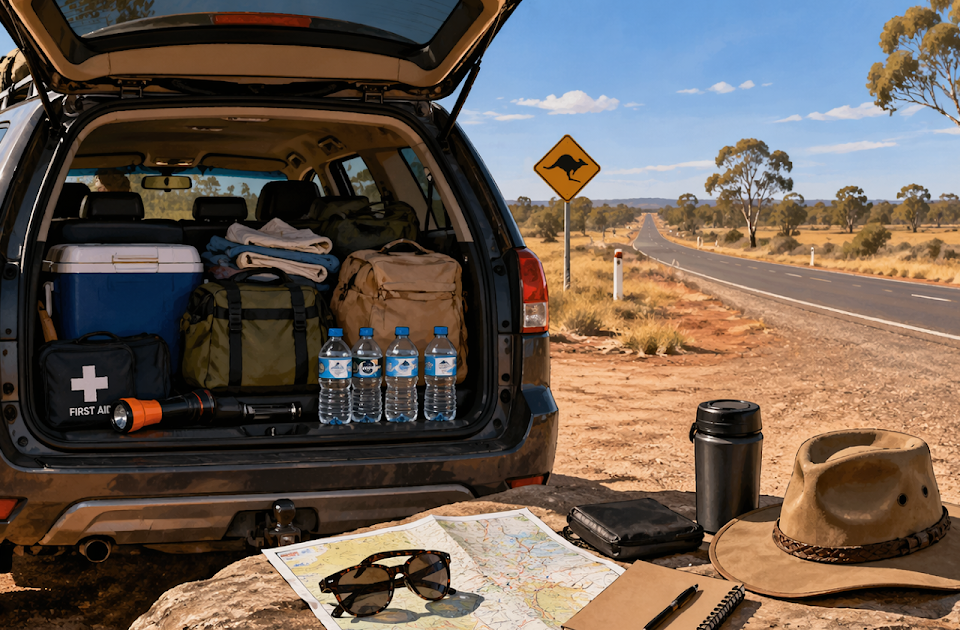
Pack enough drinking water for the people in the car, plus extra margin for heat, traffic, or a breakdown delay. Add simple food that keeps well, not just road-trip treats. Think shelf-stable snacks, not only chilled items that depend on a working esky or the next servo.
2. Vehicle and roadside basics
Your first useful packing check is not in the boot, it is under the car and around it. Make sure your vehicle has a usable spare tyre, jack, and wheel brace, and that you know where they are. If you are heading somewhere more isolated, extra fuel may be sensible, but only in a proper container and only when it suits the route and local conditions.
3. Driver function, not just passenger comfort
Pack sunglasses, sunscreen, hats, light layers, and shoes you can actually stand or walk in if you need to stop on rough ground. Keep medications, glasses, and any daily-need items in easy reach, not buried under luggage. A charger is useful, but so is keeping critical items where they can be reached without unloading half the car.
4. Weather, warnings, and navigation
Before you leave, check official warnings for the places you will pass through, not just the destination forecast. Save the relevant weather and warning sources on every phone travelling with you. The practical point is simple: do not discover a storm warning, closure, or dangerous conditions only after you have committed to the next leg.
5. Paperwork, keys, and money access
Carry your licence, booking details, roadside assistance information if you have it, and a second set of keys if another adult is travelling. Keep a backup payment option. A road trip gets messier than it needs to when the whole plan depends on one phone, one wallet, and one person remembering everything.
A quick packing framework
Use this order when you load the car:
- Non-negotiables first: water, medicines, chargers, documents, sunglasses, first aid basics.
- Vehicle support second: spare tyre access, jack, torch, basic tool roll if you carry one.
- Trip support third: snacks, tissues, wipes, rubbish bags, spare clothing layer, rain cover.
- Comfort last: beach gear, camera gear, extra shoes, decorative extras, and anything that would not matter if the car stopped for three hours.
Scope, definitions, and key terms
- Long-distance drive: Any day of driving where fatigue, reduced alertness, or thin stop spacing become part of the planning problem.
- Delay supplies: Items that help you sit safely through heat, traffic, weather, or a minor vehicle problem without rushing into bad decisions.
- Official warnings: Government weather or emergency alerts, not reposted social media screenshots or group-chat summaries.
What most people underestimate on long drives
The most common packing mistake is not forgetting one dramatic item. It is underestimating ordinary problems. A long Australian drive is more often disrupted by tired driving, heat, changing weather, animal hazards, or poor timing than by some movie-style emergency.
That is why your packing list should support your driving plan. If official guidance says to stop at least every two hours, avoid driving tired, and think carefully about night driving and animal activity, then your kit should make those choices easier. Pack enough water to stop without stress. Pack clothing and shoes that let you get out and walk at breaks. Pack the phone cables, torch, and simple supplies that make a rest stop, roadside wait, or changed plan manageable.
A realistic example
A couple leaving Adelaide for a multi-day coastal trip pack neatly but badly. Their boot is full of luggage cubes, camp chairs, and food for the Airbnb, but the spare tyre is blocked, the first aid kit is under a pile of bags, and the only charging cable is in the passenger’s tote. By mid-afternoon, one of them is tired, the weather turns ugly, and they still want to push on because unpacking for a short stop feels annoying.
A better setup looks less polished and works better. Water is easy to reach. The spare tyre tools are accessible. One small pouch holds charging gear, medications, torch, tissues, and a backup battery. Jackets and walking shoes are not buried. That does not make the trip dramatic. It makes it easier to stop early, change plans, and keep small problems small.
What not to assume
- “We can make up time by pushing through.” Fatigue planning matters more than optimism. A late, tired arrival is not a packing success.
- “Night driving is fine if the roads are quiet.” Quiet roads can still mean less visibility and more animal activity.
- “If the car starts well, we are prepared.” Vehicle condition matters, but so do water, rest planning, weather checks, and how easily you can reach key gear.
Final checks before you pull out
Treat your packing list like part of your safety plan, not just part of your holiday mood board. The most useful road trip gear is the stuff that supports a calm change of plan when the day does not run perfectly.
Safer next steps
- Service or check the vehicle before departure, then confirm tyre condition, lights, and spare-tyre access.
- Pack water, food, emergency basics, and charging gear before loading leisure items.
- Map your rest stops, watch official warnings, and decide in advance not to push through fatigue.
Red flags or when to seek help
- You are not confident the vehicle is roadworthy for the distance.
- You are towing, travelling through remote areas, or using unsealed routes without route-specific advice.
- A traveller has medication, mobility, or health needs that would make a long delay riskier.
- You do not know how to access or use your spare tyre setup.
The bottom line
What to pack for an Australian road trip depends less on your destination aesthetic and more on your exposure to heat, distance, fatigue, and delay. Start with water, vehicle basics, weather awareness, and items that keep you functional if the day gets longer than planned.
Then pack the fun gear. That order is less exciting, but it is the one that keeps the trip usable when conditions stop being ideal.
FAQs
Q1. Do I need to carry extra water even for a normal highway road trip?
A1. In Australia, carrying more drinking water than you expect to use is a sensible baseline, especially in warm weather or on long stretches between stops. You may never need the extra, but it is one of the simplest ways to make a delay less stressful.
Q2. Do I really need a break every two hours if I feel fine?
A2. Regular breaks are still the better plan. Fatigue is not always obvious when it starts, and waiting until you feel terrible is a weak rule for a long driving day. Build the breaks in before you leave.
Q3. Should I avoid driving at night on an Australian road trip?
A3. That depends on the route, the season, your rest level, and your experience, but night driving deserves more caution than many people give it. Animal activity and lower visibility can change the risk quickly, so it should be a deliberate choice, not the default way to recover lost time.
By: Rex Iriarte
About the author: Editorial research and practical explainers focused on turning public guidance into clear, usable planning checklists for everyday trips.
Last updated: 2026-04-23
Disclosure: No paid placement influenced this post.
Disclaimer
This article is general educational information for trip planning. It does not replace route-specific road conditions, mechanical advice, local emergency instructions, or medical advice. In an emergency, follow official instructions and call 000.
References