Options That Keep It Simple : For Beginners de
Why shipping setup matters earlier than most founders expect
A lot of small store owners treat shipping like a background setting. Add a few rates, print labels later, and figure it out as orders come in. The problem is that shipping affects trust, pricing, and the customer’s final decision more than people think.
Shoppers may love the product and still pause when they reach delivery details. They want to know how much shipping costs, how long it takes, and whether the process feels predictable. If those answers are unclear, checkout can start feeling risky.
For a small online store, the good news is that shipping setup does not need to be fancy at the start. In most cases, the smartest move is to choose a simple shipping structure you can actually manage, explain it clearly, and improve it later once real orders start showing you what works.
What to decide before you publish your shipping settings
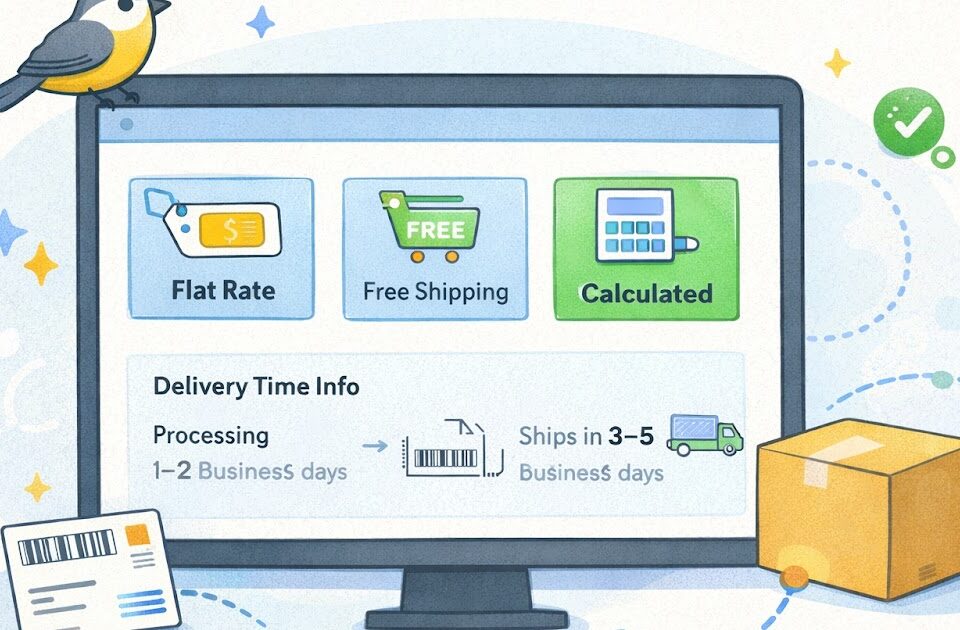
The first decision is what kind of shipping structure you want customers to see. For many small stores, the easiest starting point is one of three options: flat-rate shipping, free shipping above a threshold, or simple calculated rates if the platform and product mix make that manageable.
Flat-rate shipping is often the easiest to explain. If every order under a certain size or weight gets one standard shipping charge, customers know what to expect. That can be especially helpful for a newer store where clarity matters more than perfect precision.
Free shipping above a threshold can also work well when margins allow it. It gives shoppers a clear incentive and keeps the message easy to understand. A lot of small stores use this because it feels simple from the customer side, even if the owner still has to watch the math carefully.
Calculated shipping can make sense when product sizes vary a lot or when the business sells items that are harder to group into one simple shipping rule. Still, for a small store just getting started, calculated shipping can also create more testing and more edge cases. Simpler usually wins early.
The next decision is processing time. This is separate from carrier travel time, and it is one of the most common points of confusion. Customers need to know how long it takes your store to pack and hand off the order before shipping even begins.
What to decide first
- Whether to use flat-rate, free-shipping threshold, or calculated shipping
- What your processing time will be
- Which regions or countries you will ship to
- Which carrier or label process you plan to use
- Whether shipping supplies and packaging costs are already included in your pricing
- What to do with delays, lost packages, or incorrect addresses
That last point matters because shipping is not only about normal orders. It is also about what happens when something goes sideways.
How to keep shipping clear for shoppers
A shipping setup can be technically correct and still feel confusing to customers. This is where clarity matters most.
Start by separating processing time from transit time. If the store usually packs orders in 2 business days and the carrier usually takes 3 to 5 business days after that, say both. A lot of shoppers hear “shipping takes 3 to 5 days” and assume the order will move right away. When the package does not ship until two days later, trust can drop even if the timeline was normal.
It also helps to decide what the store will say on product pages, at checkout, and on the shipping page. Those messages should work together. A short summary on the product page, clear charges at checkout, and a fuller shipping page often make the whole process feel more complete.
A simple example:
- Product page: “Ships in 2 business days”
- Checkout: shipping charge shown before payment
- Shipping page: “Orders usually process in 1 to 2 business days. Standard delivery usually takes 3 to 5 business days after shipment.”
That kind of structure feels easier to trust because the customer is not forced to guess.
Packaging choices matter too, even if customers never see the backend setup. If your products vary in size, choose a small number of packaging types you can use consistently. Too many box sizes, envelope types, or custom exceptions can make fulfillment harder than it needs to be. For a small store, consistency often saves more time than trying to optimize every shipment perfectly.
Practical steps
- Pick the simplest shipping method your product mix can support.
- Set a realistic processing time, not an aspirational one.
- Write the shipping message in plain language.
- Test how shipping charges appear before checkout is finished.
- Make sure product pages, checkout, and policy pages do not contradict each other.
A simple setup is not the same as a sloppy setup. The point is to remove guesswork, not to hide details.
Common shipping setup mistakes to avoid
One common mistake is trying to make shipping look cheaper than it really is. A founder may undercharge for shipping to keep customers happy, then realize the business is quietly losing money on every order. That can work for a short promotion, but it is not a great default setup if the numbers do not hold.
Another issue is setting processing times that sound good but are hard to maintain. If your real pace is two or three business days, do not promise same-day handling unless you can consistently pull it off. Missing your own shipping timeline makes the store feel less reliable fast.
A third mistake is making the shipping rules too complicated. If different products, regions, thresholds, and exceptions stack up too early, the setup becomes harder for both the store and the customer to understand.
Common mistakes
- Underpricing shipping without checking the real cost
- Mixing up processing time and carrier delivery time
- Offering too many shipping options too early
- Writing vague shipping messages like “ships soon”
- Forgetting to plan for lost packages, delays, or bad addresses
- Letting product pages and shipping pages say different things
Another practical issue is not testing the shipping flow on mobile. A lot of customers will see shipping charges, address forms, and delivery timing on their phones. If the totals appear late or the wording feels cramped, checkout confidence can drop.
A simple example: imagine a small candle store promising “fast shipping” while its policy page quietly says orders process in 4 business days. That mismatch creates doubt. A clearer message like “Orders ship in 2 to 4 business days” may sound less flashy, but it builds more trust because it feels honest.
A quick shipping setup checklist summary
Quick checklist
- [ ] The store has one clear shipping structure at launch
- [ ] Processing time is stated separately from delivery time
- [ ] Shipping charges appear clearly before payment
- [ ] The regions you ship to are defined
- [ ] Packaging choices are simple enough to manage
- [ ] The shipping page uses plain language
- [ ] Product pages and checkout reflect the same shipping expectations
- [ ] Delays, lost packages, and wrong-address situations have a basic process
- [ ] The mobile shipping flow has been tested
- [ ] The shipping setup feels workable for the business, not just attractive on paper
If several of these points are still unclear, the store probably needs another pass before launch.
Start simple, then improve with real orders
A small online store does not need an advanced shipping system on day one. It needs a system that customers can understand and the business can actually fulfill without stress.
That is why a simple first setup often works best. Choose a shipping method you can explain clearly, set honest processing times, and make sure the customer sees the key details before paying. Once real orders start coming in, you can decide whether to refine rates, raise a free-shipping threshold, or add new shipping options.
Shipping tends to get easier when the first version is manageable. It gets harder when the first version is overly ambitious.
Gentle next step
Review your shipping settings with one question in mind: would a first-time customer understand what they will pay and when their order will move without emailing support first? If not, simplify the structure and rewrite the wording before launch. Sin estres. A clear shipping setup usually does more for trust than a complicated one ever will.
FAQs
Q1. What is the easiest shipping option for a small online store?
A1. For many small stores, flat-rate shipping is the easiest place to start because it is simple to explain and easier to manage operationally.
Q2. Should I offer free shipping right away?
A2. Only if the numbers support it. Free shipping can help, but it should still fit your margins and product pricing.
Q3. What is the difference between processing time and shipping time?
A3. Processing time is how long your store takes to prepare the order before handoff. Shipping or transit time is how long the carrier takes after the order has shipped.
Q4. How many shipping options should a small store offer at launch?
A4. Usually fewer is better at the beginning. A simple setup is often easier for both the customer and the store team to understand and manage.